The City of Games · 2000
The biggest kinetic installation in the history of art
Two thousand artworks — Dancers, Acrobats, Guards and Harlequins — set turning by swings, wheels and balls, with the Temple of Colours at its heart.
Immersive worlds, 1995 — 2004
Four monumental environments you do not look at but enter — cities of crosses and harlequins, a temple painted across two thousand square metres of canvas. Worlds built by hand, attracting more than two million visitors across Europe.
The City of Games · 2000
Two thousand artworks — Dancers, Acrobats, Guards and Harlequins — set turning by swings, wheels and balls, with the Temple of Colours at its heart.
2000 · Kinetic installation
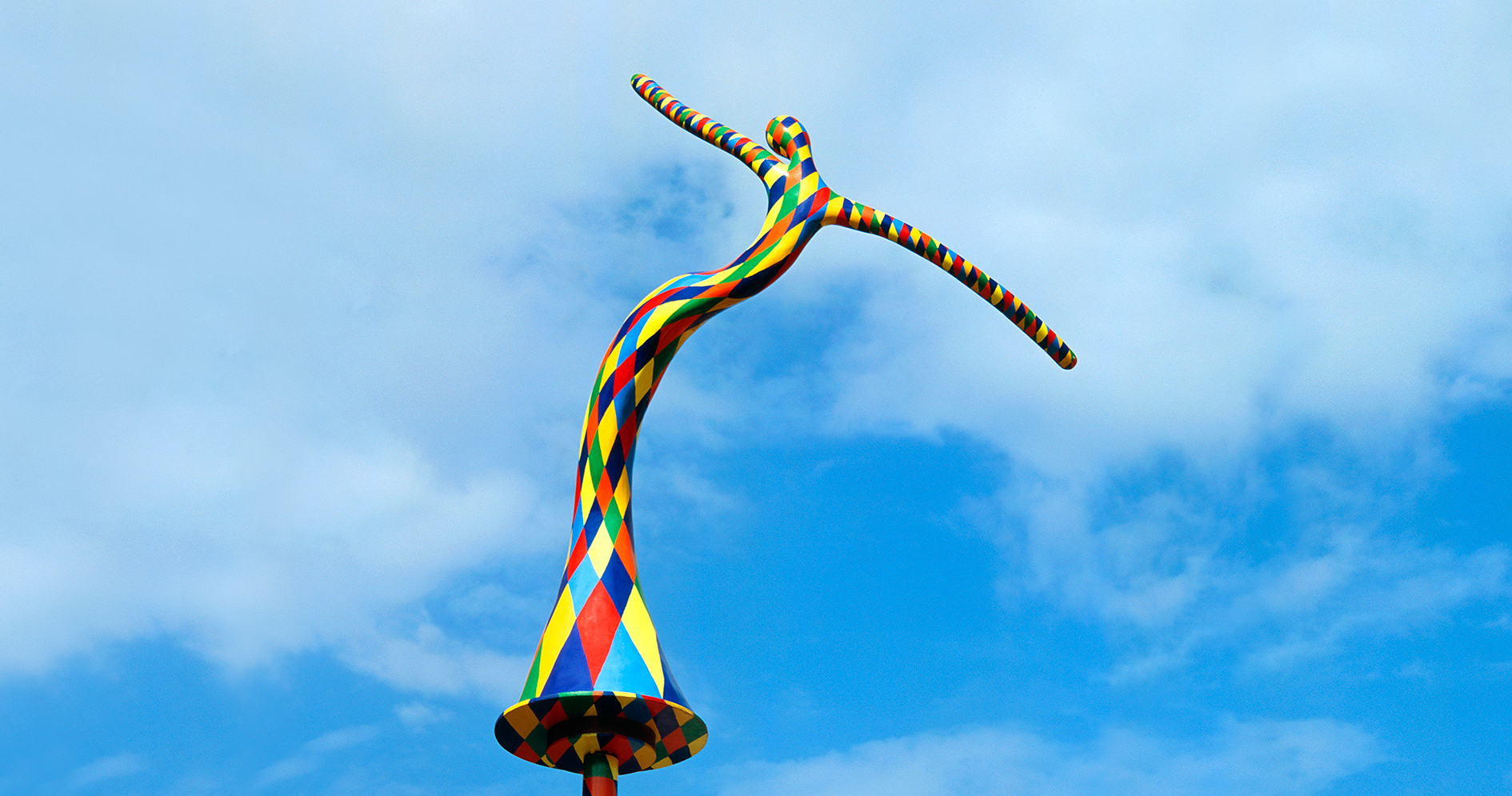
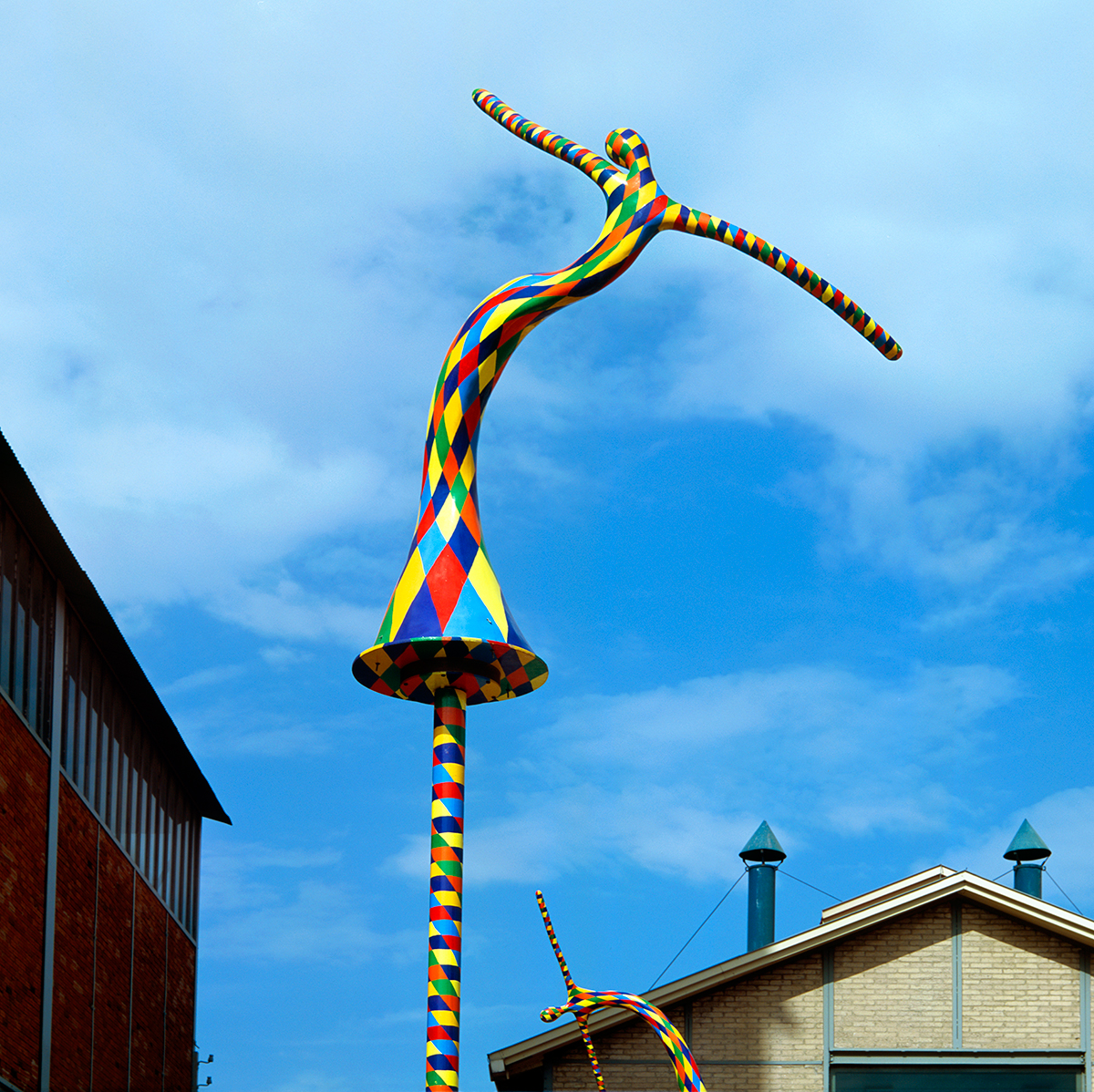
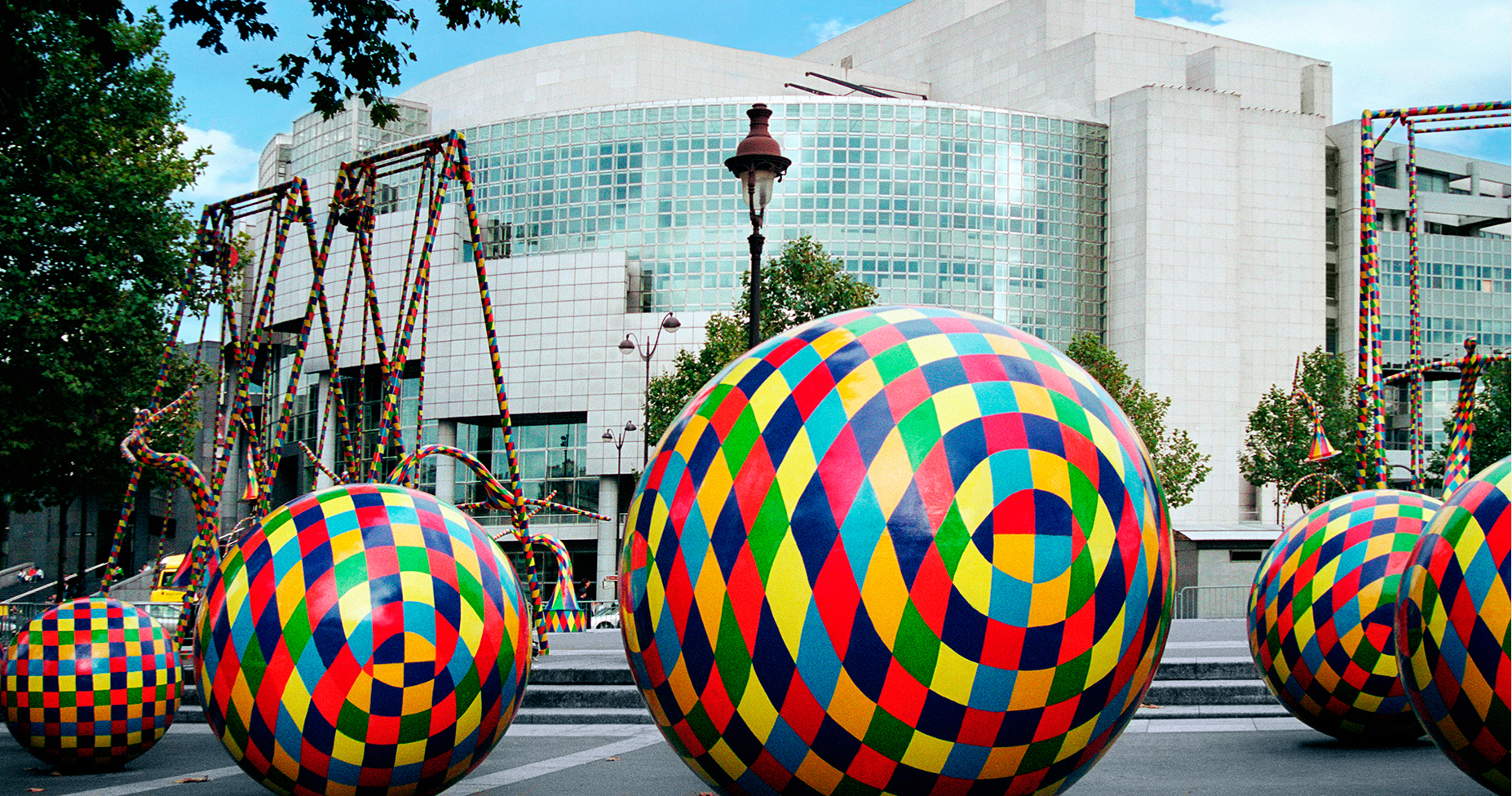
The City of Games was created by the international sculptress and painter Vassiliki in 2000. The City includes 2,000 artworks and the Temple of Colours, and is considered to be the biggest kinetic installation in the history of art.
A majestic “stage” with all the necessary paraphernalia, it promises a trip to the magic world of imagination through the unknown — behind which lurks the danger of balance. An independent, integrated and self-sufficient environment, it carries along its visitors through the grandness of its extension and the indescribable game of the senses.
The figure of the City
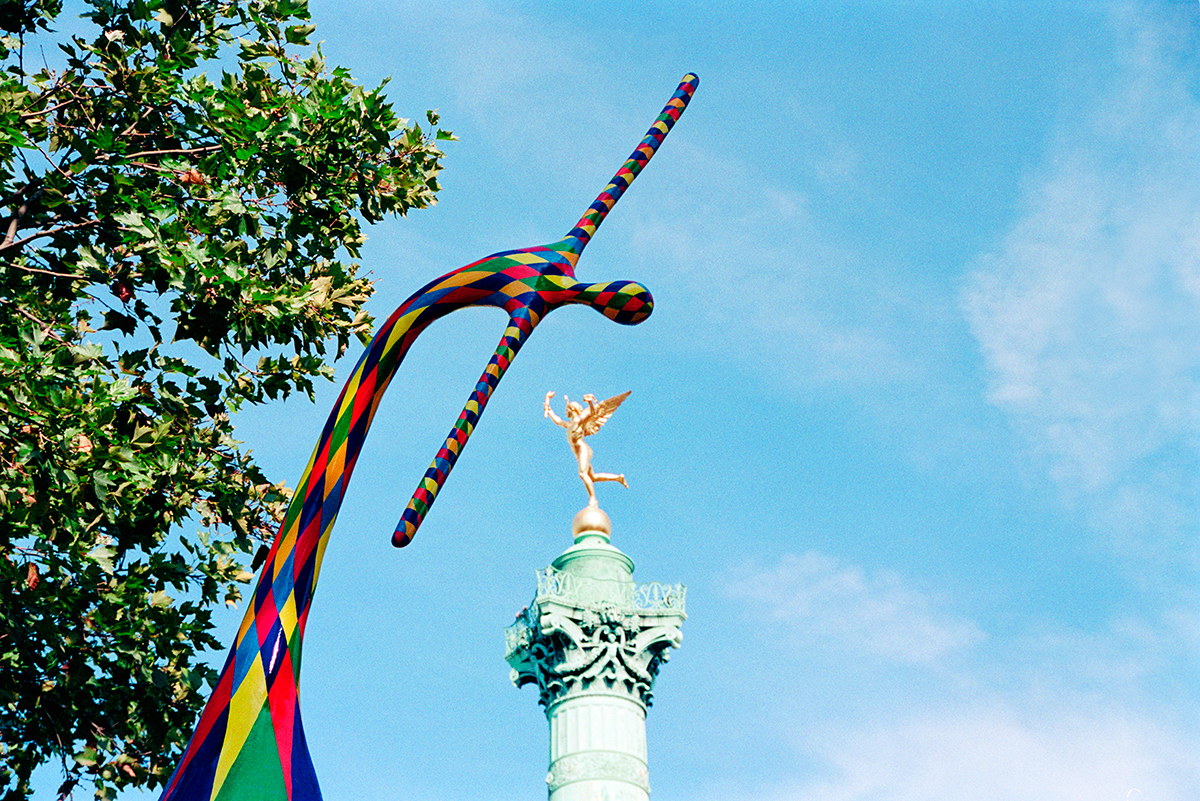
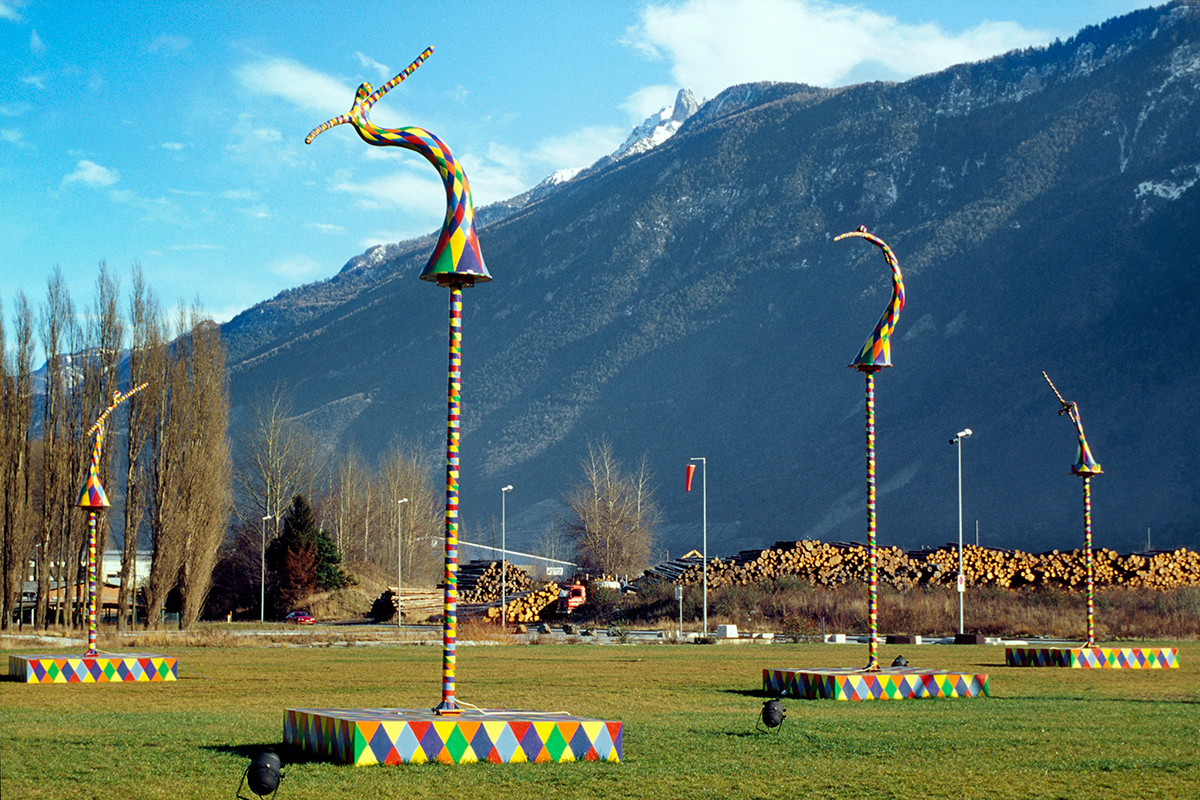
Following the inspired Stavroschimites — cross-shaped figures referring to the form of virtue through its embodiment in the human figure — Harlequins emerge as a key symbol of the artist's approach toward life, death and the divine. The City of Games is composed of a plethora of colours, shapes and endless arabesques flying into the air, outlined by the figures of Dancers, Acrobats, Guards and the Harlequins, the dominant figure of the City, through swings, the wheel, balls and other machine-made devices.
The characteristic multi-coloured diamond-shape costume of Harlequin, the protagonist of commedia dell'arte, is the primary motif of the City of Games. Dressing up the walls of its surroundings, the diamond shape evolves into an enigmatic game of colour combinations based on so-called optical experience and perception. The colour tones, the combinations and the diamond shapes are almost never perceived to be the same; this differentiated optical perception is due to functions and stimuli of the human brain. A game of dizziness and intoxicating “hypnotism” accompanies the acrobatic attitude of the brain.
Walking the tightrope between good and bad, serious and funny in order to conquer life is absolutely dangerous behaviour, which entails tragic irony. A tragic figure, Harlequin is conceptually defined by the vivid antithesis between his colourful, entertaining appearance and his exceptionally serious psyche — demonstrating the fragile balance of his course and role, and alluding to the ontological dimension of the artist and the actor.
Tall and thin, fragile, innocent, naïve, dangerous, constantly moving and seeking to maintain their balance with wide open arms, they are the acrobats of life and soul. A theatre group or members of a ballet, the Harlequins of the City of Games acknowledge their collective presence by forming a community of angels of life, representing love. The Harlequin, the Dancer, the Acrobat and the Guardian are our alter egos: they epitomize the tragedy of comedy, and they remind us of the melancholy upon returning to reality.
The largest 3-D painting in contemporary art
The Temple of Colours (2000–2004) is a gigantic painting on canvas, with acrylic paint, all designed and painted by hand. The pattern relates to the geometrical shape of the rhombus (diamond), and no special technique has been used besides the painting with a brush of each one of the diamonds. The work took four years to be completed by the artist and four assistants.
The work can adjust in any space of any dimension — even a small room or a gallery — and can expand up to 2,000 square metres. The visitors are requested to remove their shoes before entering the Temple of Colours, since they are walking on a painting. A two-axes sculpture volume, differentiated according to the country exhibited, was being installed until 2005. Since then, according to the artist's decision, no sculpture volume that could be related to religious symbols has been installed, due to intense social reactions.
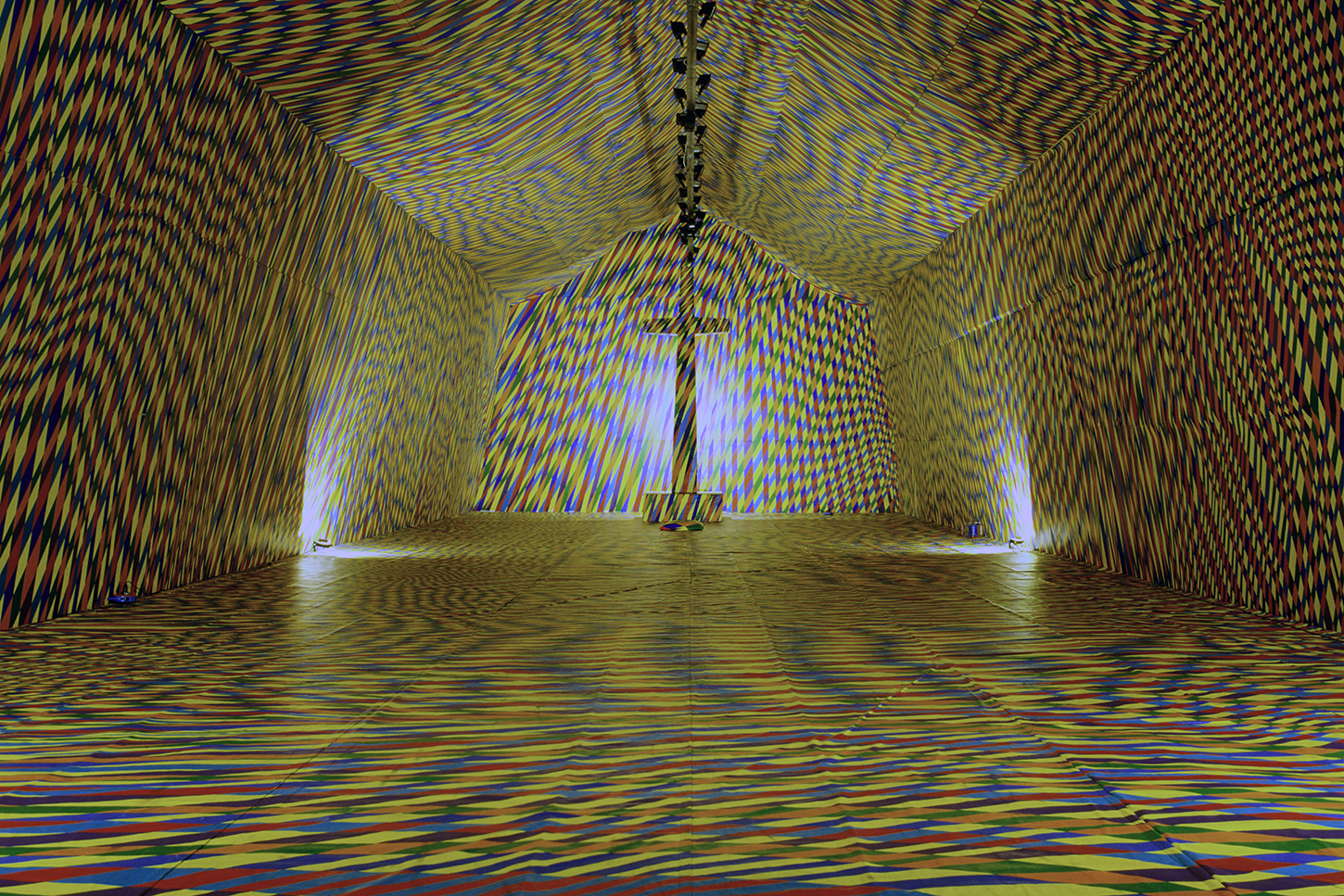
The Temple of Colours · Interior, L70 × W21 × H12 m
Interior surface covered with canvas, painted by hand with acrylic colours — every diamond laid by brush, never quite the same twice to the eye.
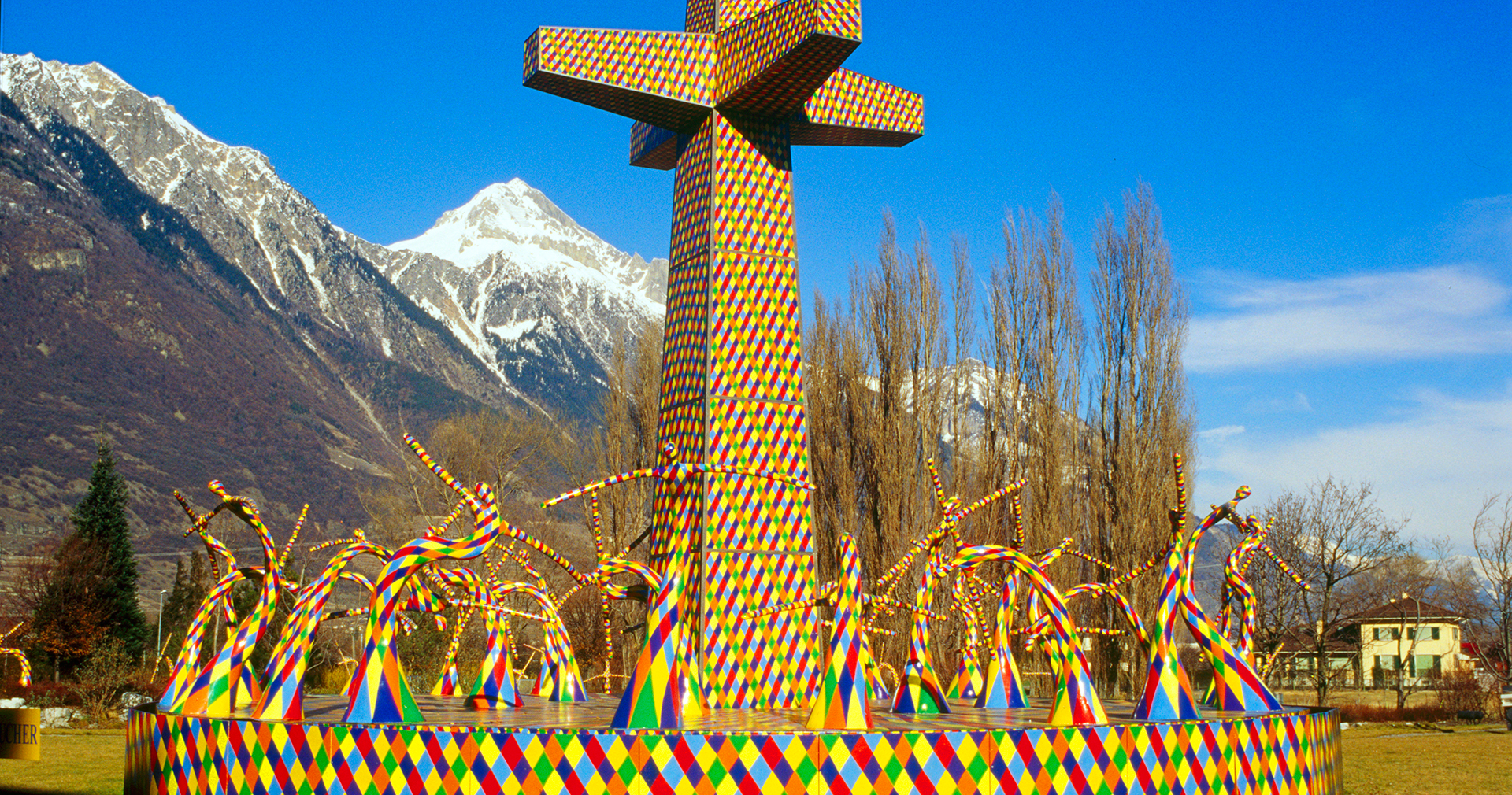
1995 · Installation
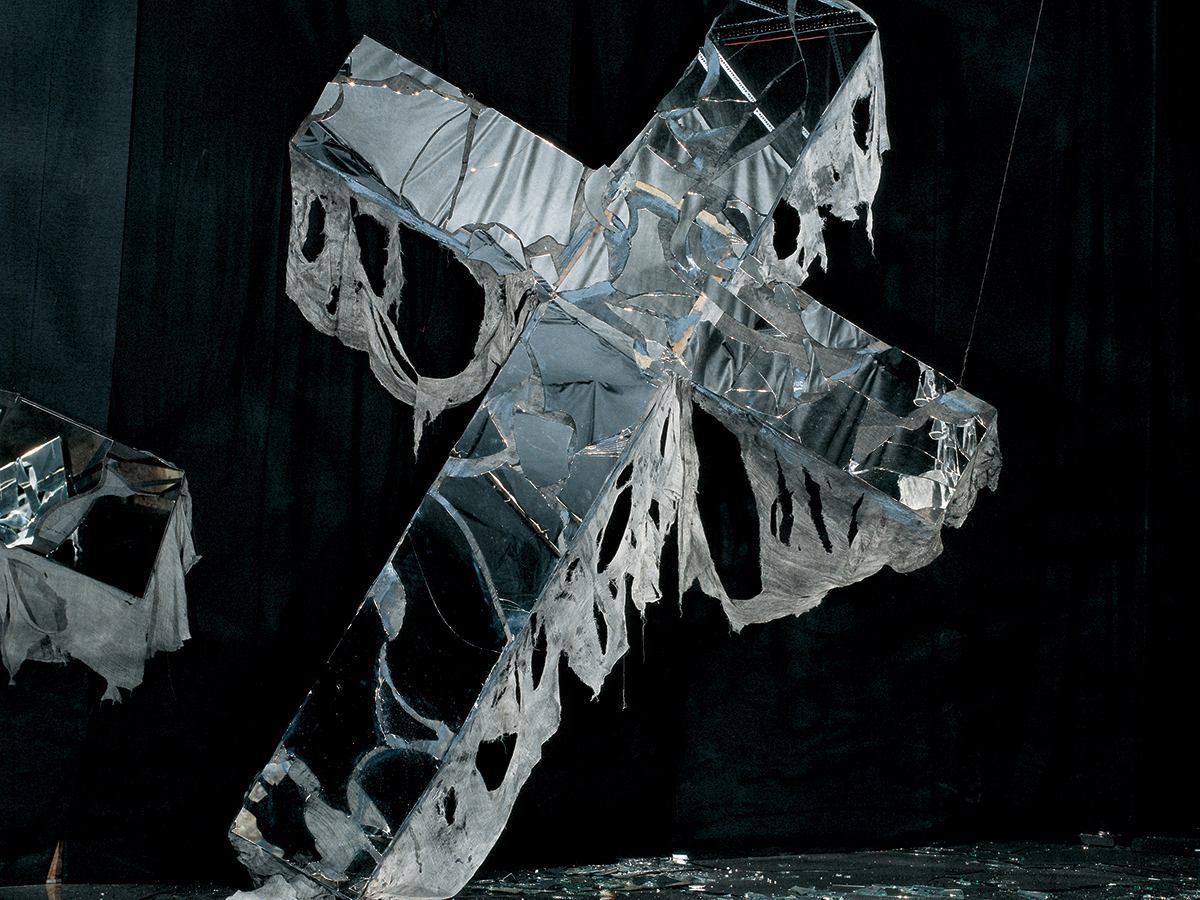
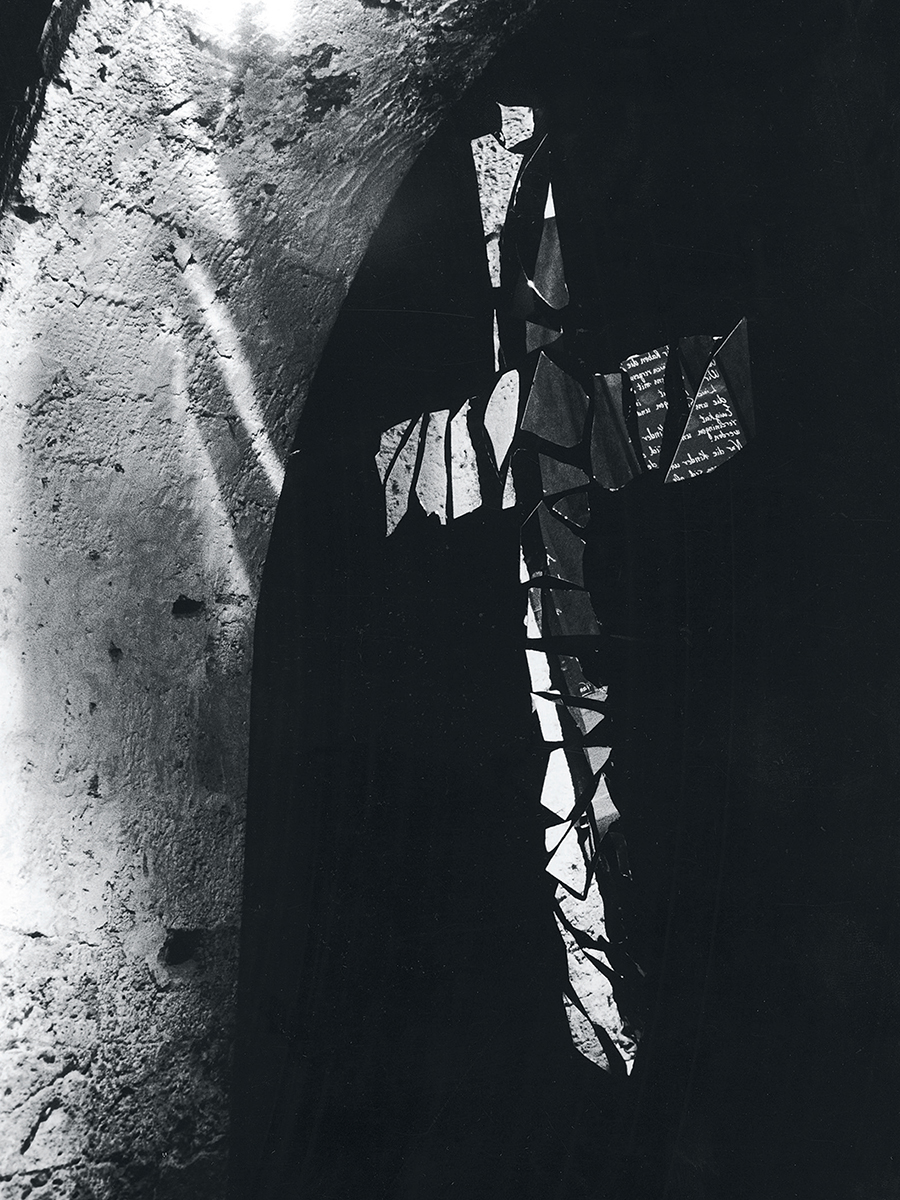
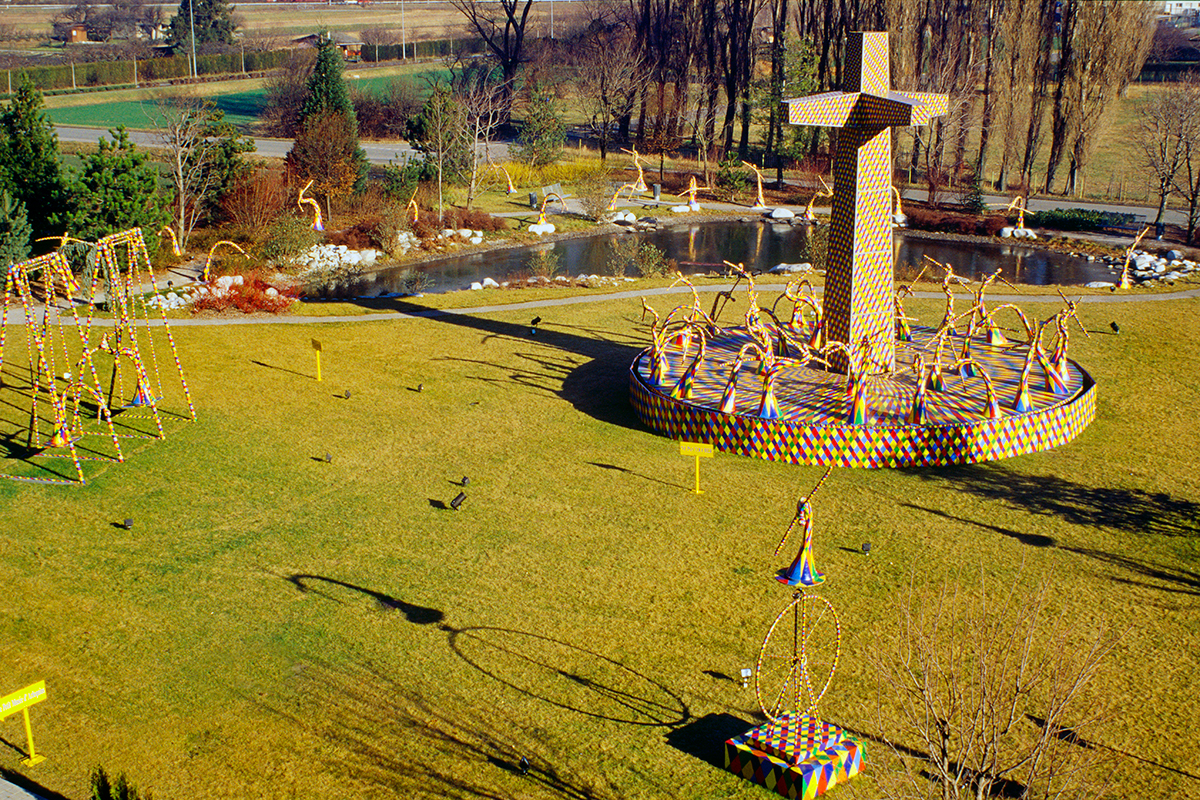
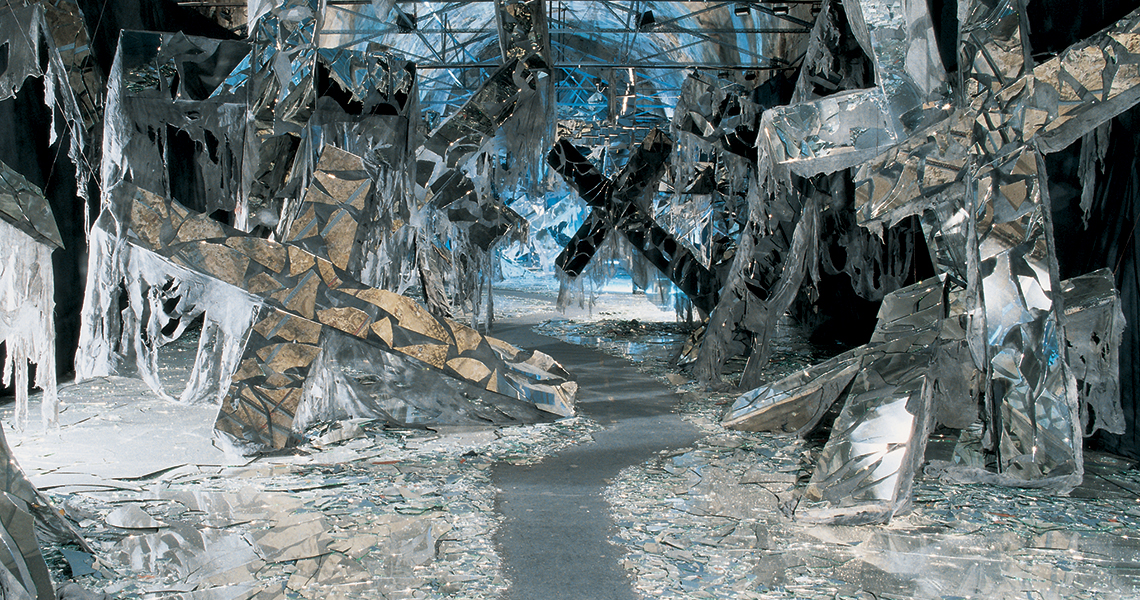
The City of Crosses was created by the sculptress and painter Vassiliki in 1995. The 500 crosses are made of iron and broken mirrors, and the installation has been exhibited all over Europe. Visitors of the City of Crosses talk about an unforgettable experience.
Faithful to the aesthetic interpretation of the cross — on which countless smashed pieces of mirror entrap and reflect the idol — Vassiliki transforms the image but not the shape, building a devout environment whose relations among the crosses give a new substance to the interaction between the microcosm of man and the macrocosm of the universe.
A system of coordinates within space
In the devout environment of the City of Crosses the artist combines her artistic proposal with the everlasting concern of inner balance, and man's position in the universal whole. Their opposite directions, course and trends form the three-dimensional substance of the City's environment, a system of coordinates within space: North and South, East and West, Zenith and Nadir, left and right.
The crossing of the vertical with the horizontal arms — the meeting point of opposite directions, and the origin of absolute and irreversible Truth — impels the artist to use the cross as the ultimate point of artistic expression. In her art the centre of the cross represents reconciliation, the withering of conflicts, the cooperation of all powers that compete with one another. In the City of Crosses the reality of a dream or a symbol is expressed indirectly through a mixture of materials, shapes and proportions, out of which emerges the final revelation — a revelation of the breadth and depth of the soul itself, which signals the beginning of its redemption.
Athens, 1998 — the right to a symbol
When the work provoked fanatical reaction in Athens, certain voices sought to deny the artist her fundamental right: the use, in her own work, of the most humanist symbol of mankind. In defence of that right, the French critic and theorist Pierre Restany — Vassiliki's lifelong mentor — wrote in her defence from Paris.
“The cross is one of the oldest symbols of the presence of man on earth, and Ms Vassiliki uses it as the basic element of her art. In Athens in 1998, there are people who deny to Ms Vassiliki her fundamental right — the use in her work of the most humanist symbol of mankind.”
Pierre RestanyArt critic · Paris, 13 April 1998
“Such an attitude reveals a surprising narrowness of mind in a land which pretends to have invented democracy and given birth to individual freedom of expression.”
Pierre Restany‘The Cross’ · 1998
“Vassiliki borrows from religion, but is purposely differentiated from the mystery of religious fear and dogma. The cross exists as a unifying power which appeals to dissimilar, if not opposing, powers.”
Eleni AthanassiouArt historian · 1996
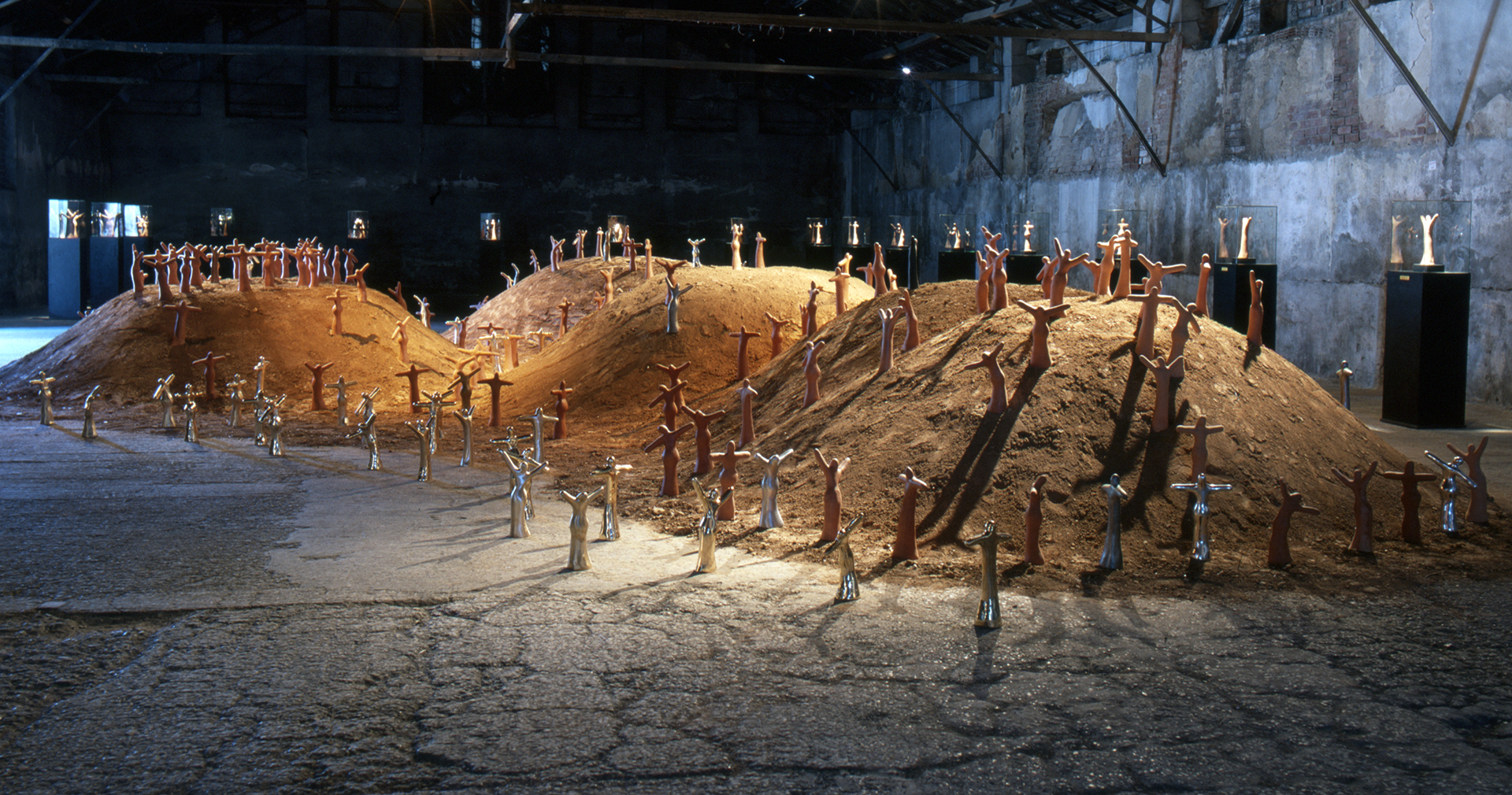
1996 — 1997 · Installation
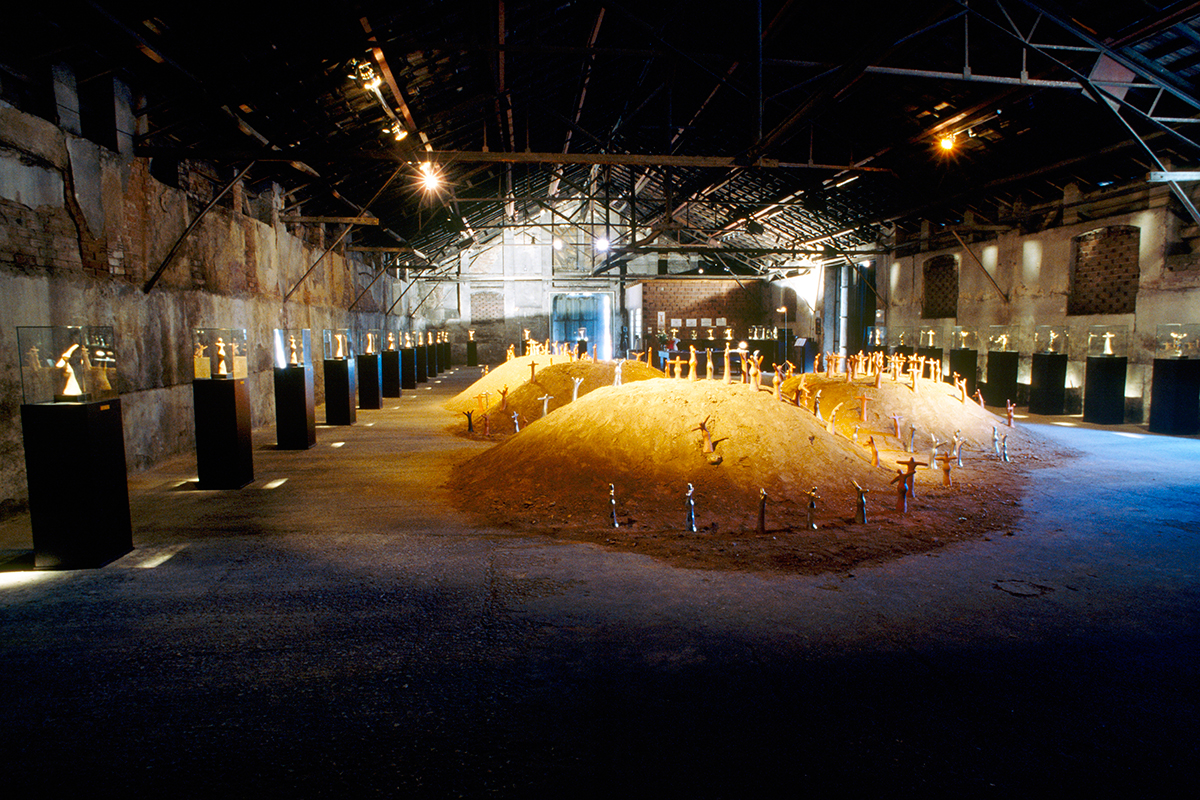
With stavroschimitises (cross-shaped human females) and stavroschimites (cross-shaped human males), the artist revives the intellectual charge of the symbol of the cross, infusing it with life — adapting its shape to the human figure and offering it the cross's fearful substance. Expressive and at the same time frugal, the figures transmit the spirituality accompanying every state of psychological exaltation and intellectual renaissance.
Where the City of Crosses dealt with the perfect society on a theoretical level, the community of Stavroschimites practically embodies it — the last “citizens” of the earthly paradise.
Soldiers of a holy crusade
With a distinctly direct interpretation of symbolism — in which the main protagonist, the cross, coexists, moves along and suffers with the object of its symbolism, the human being — Vassiliki communicates the gradual and painful way to the attainment of an intellectual and emotional state of being that does not succumb to relativeness and subjectiveness. Stavroschimitises and stavroschimites announce the arrival at the final stage of a process that originates with the crosses and ends in the expressive presence of alive and active beings.
Soldiers of a holy crusade, the Stavroschimites become combatant battalions in Vassiliki's idealistic, existential wanderings. Instead of borrowing the shape of the cross, they act as self-shaped creations who grope for the knowledge of the divine substance. The uplifting and inviting opening of their hands-arms reflects their mystical communication with the immaterial world of Creation, aiming at the attainment of truth which leads to the purification of the soul.
In his contact with their community, the visitor-participant realizes that those figures are his natural environment, since he could very well be identified with their position, role and existence. An outcome of the interaction between artistic inspiration and philosophical contemplation, the Stavroschimites are the translation, into a special language, of a spiritual given — a fragment of Vassiliki's spirituality, and the spirituality of the idea represented by them.
“Bearing the shape of the cross, the members of the Stavroschimites' community are in fact those beings who, through their standpoint in the complicated journey of life, justly become the last ‘citizens' of the earthly paradise.”
Eleni AthanassiouArt historian · ‘Stavroschimites', 1997